
Case Study
Rebuilding the Rules Engine for Kount 360
How I redesigned policy management so fraud teams could create and ship rules faster — across three product versions and three changes in product leadership.
Enterprise Product Design // Design Leadership // UX Architecture
Roles
Sole Product Designer — research through delivery
Team
Product management, engineering architects, compliance, stakeholders
Timeline
2021–2024, shipped across three versions
Tools
Figma, Jira, Confluence, Heap, Optimal Workshop
Platform
Kount 360 (Equifax)
Outcomes
1M+
The platform scaled from roughly 100,000 transactions a day to over 1,000,000 across the redesign period.
50%
In testing, the "OR" logic and segment model reduced rule-creation steps by 50%
41.5%
Analyst feedback moved from "triggers are confusing" to praise for segments clarifying rule firing; adoption rose to 41.5%.
64.5%
A Task Completion Rate of 64.5% for new policies was achieved .
Project Background
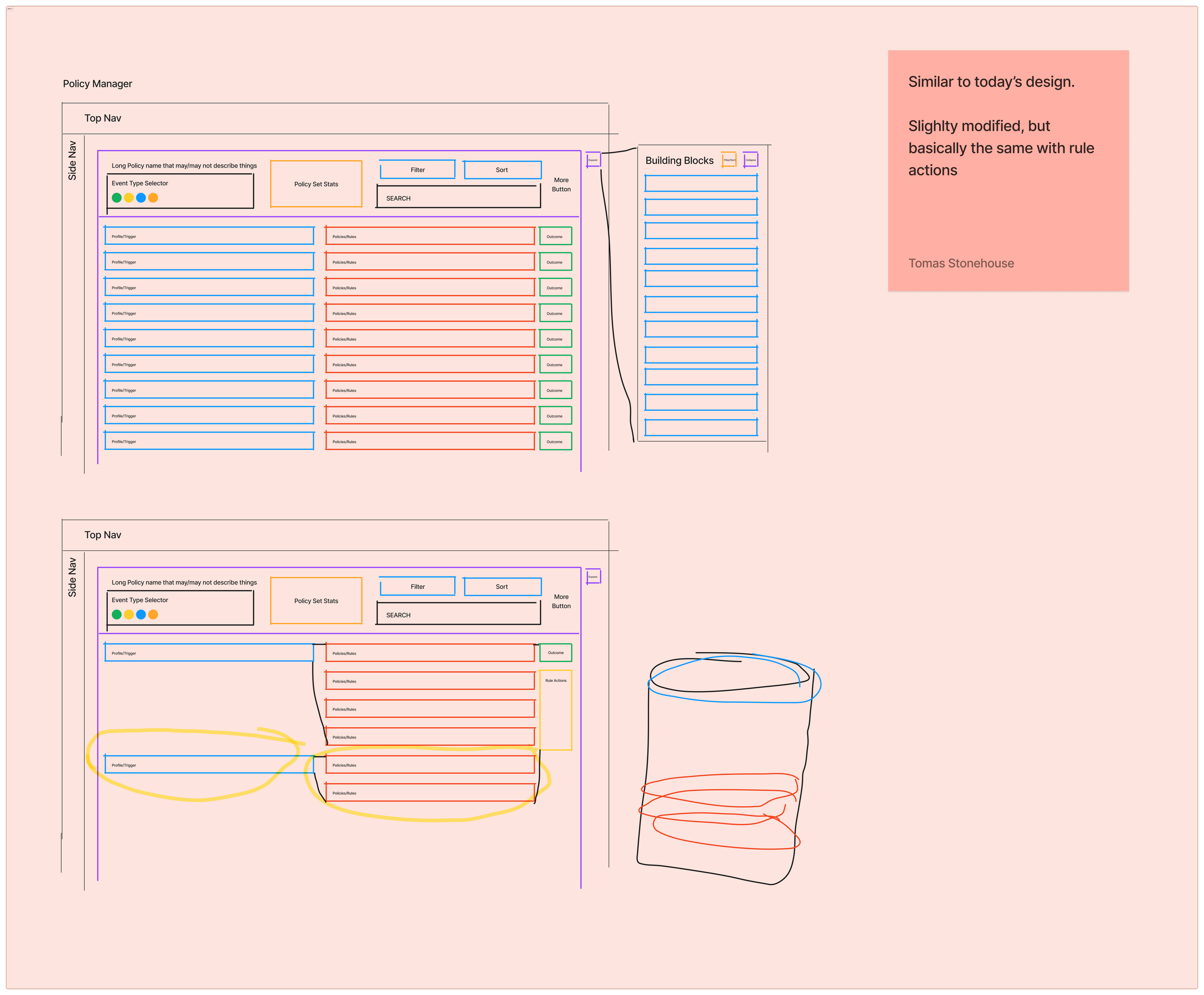
Kount 360 integrates identity verification, payment security, and compliance tools into a unified system. It allows organizations to address threats right from initial customer interactions. The Policy Management feature enables users to define rules, segment traffic, apply logic conditions, and schedule updates. As the sole designer, I managed research, wireframing, mockups, prototyping, and user testing throughout the project.
The work progressed in 3 phases:
Version 1 (2021 - 2023)
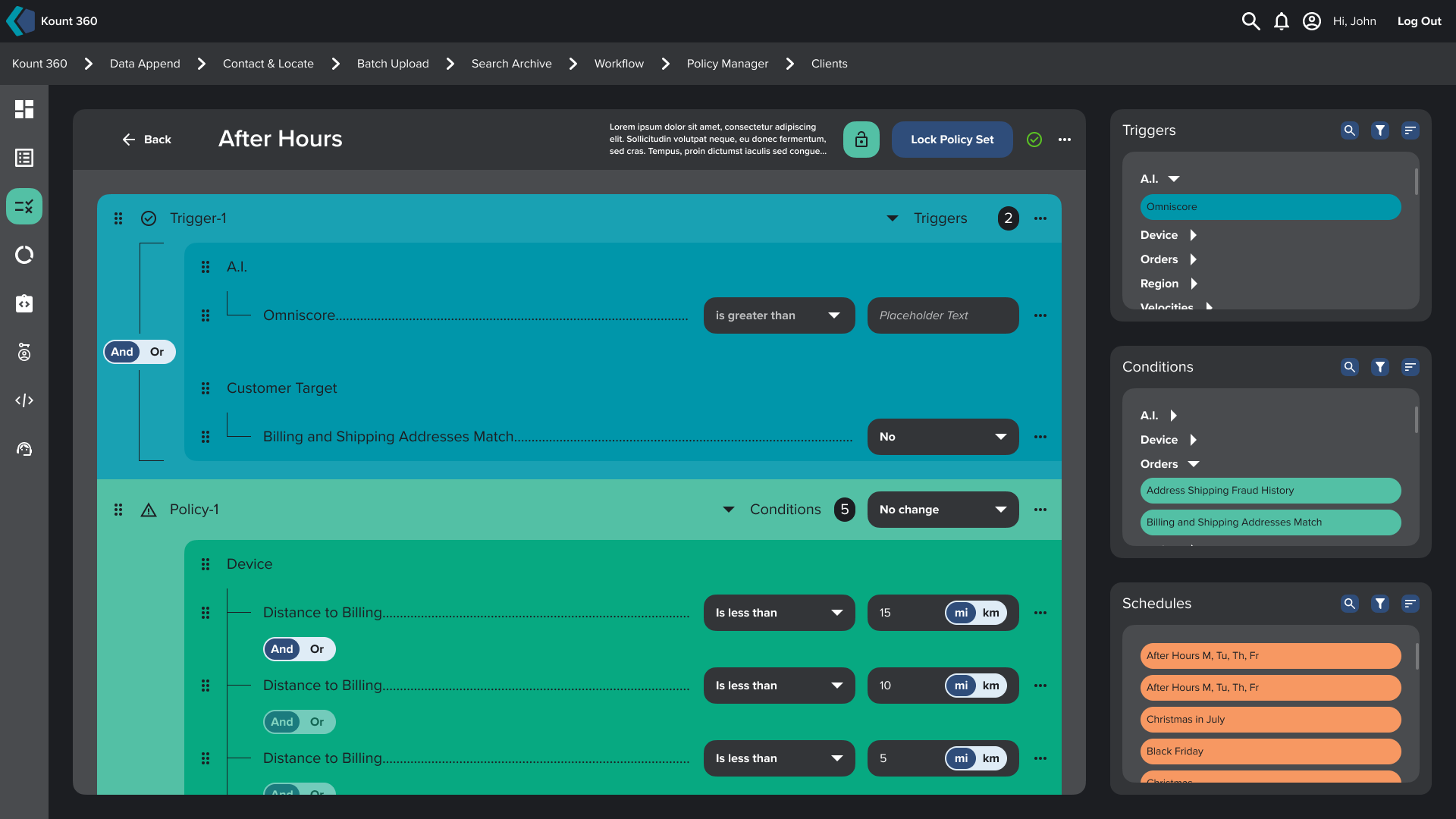
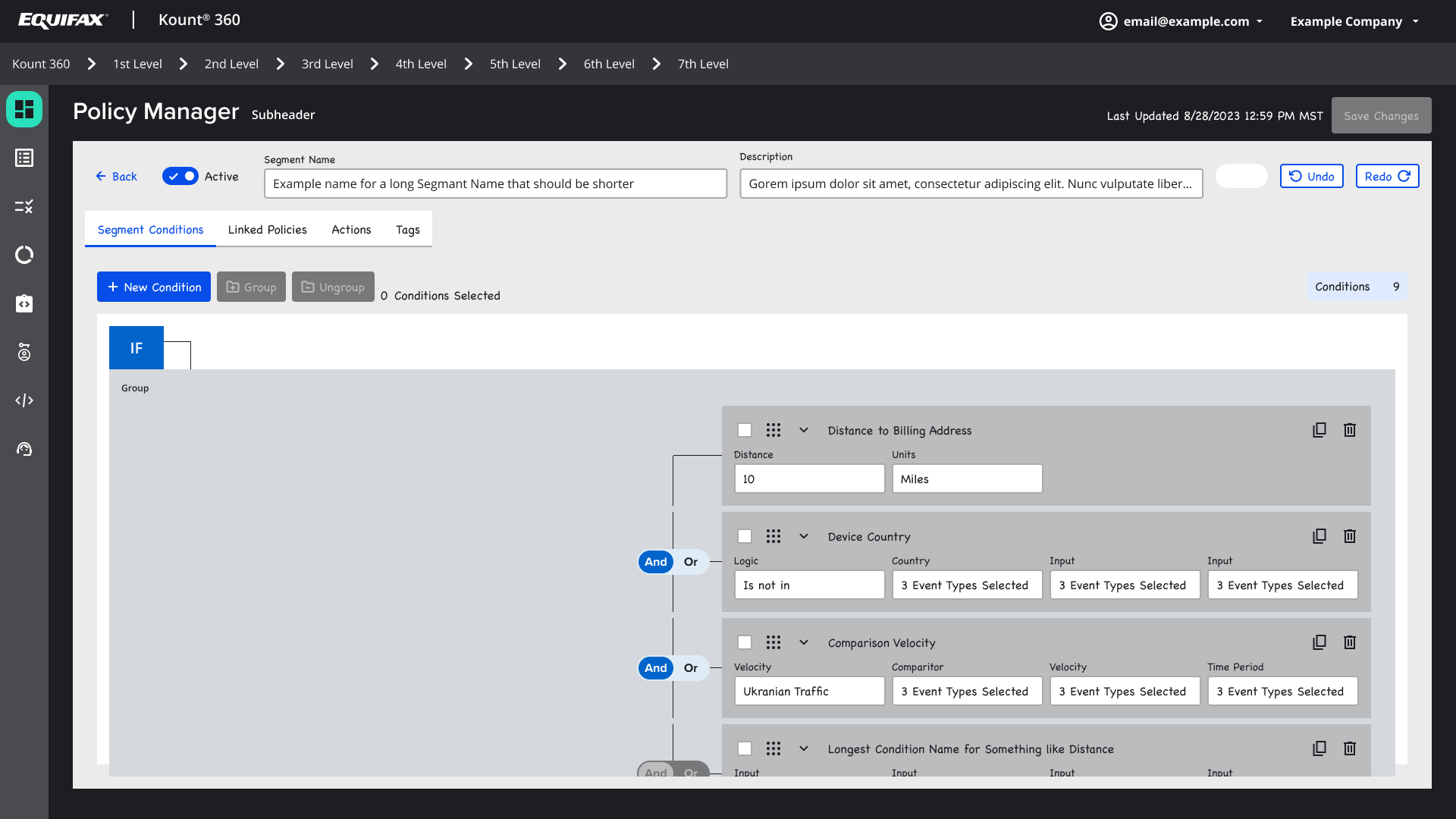
incorporated "OR" logic for rules, traffic segmentation, and scheduled policy changes.
Version 2 (2023-2024)
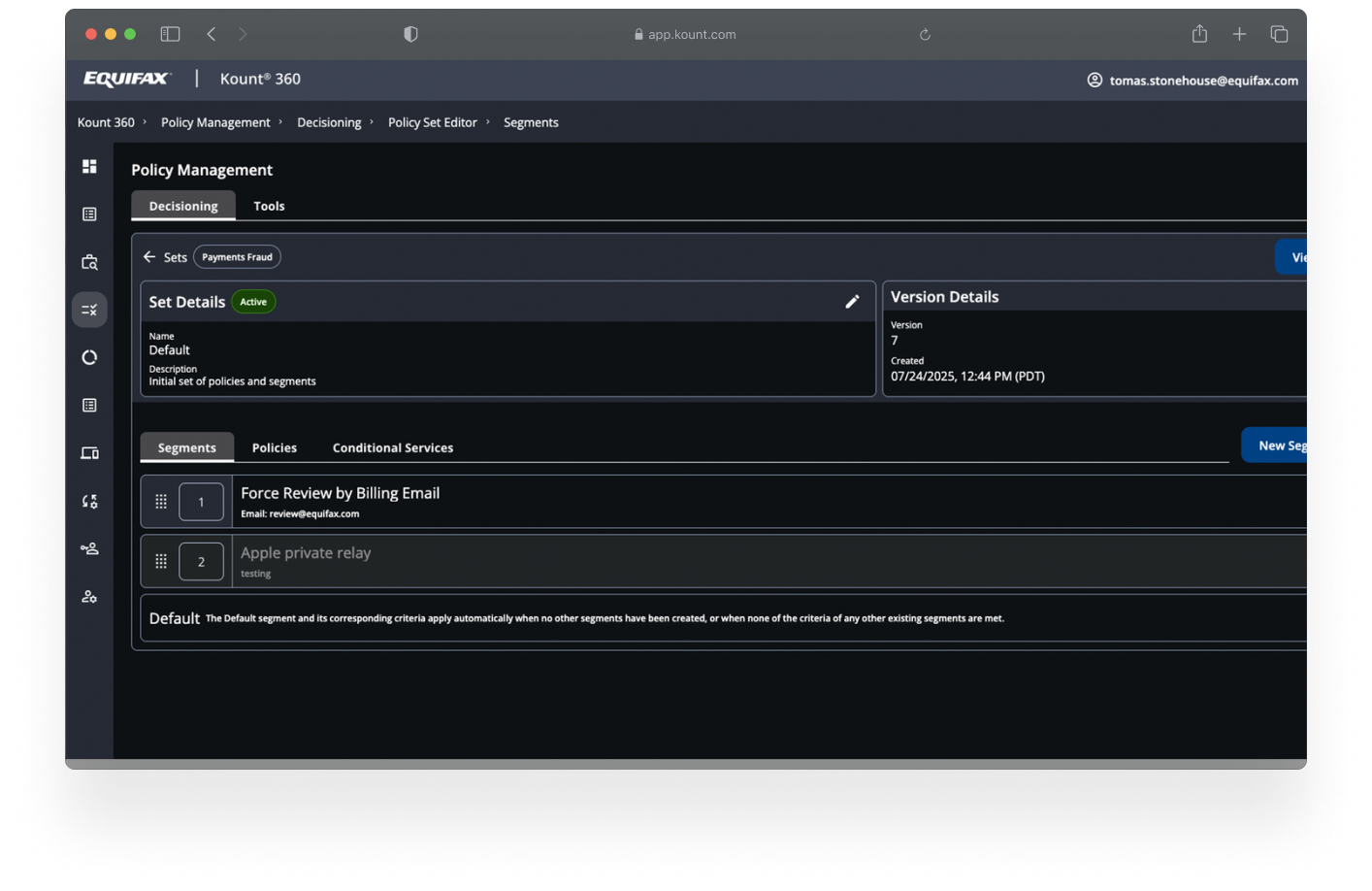
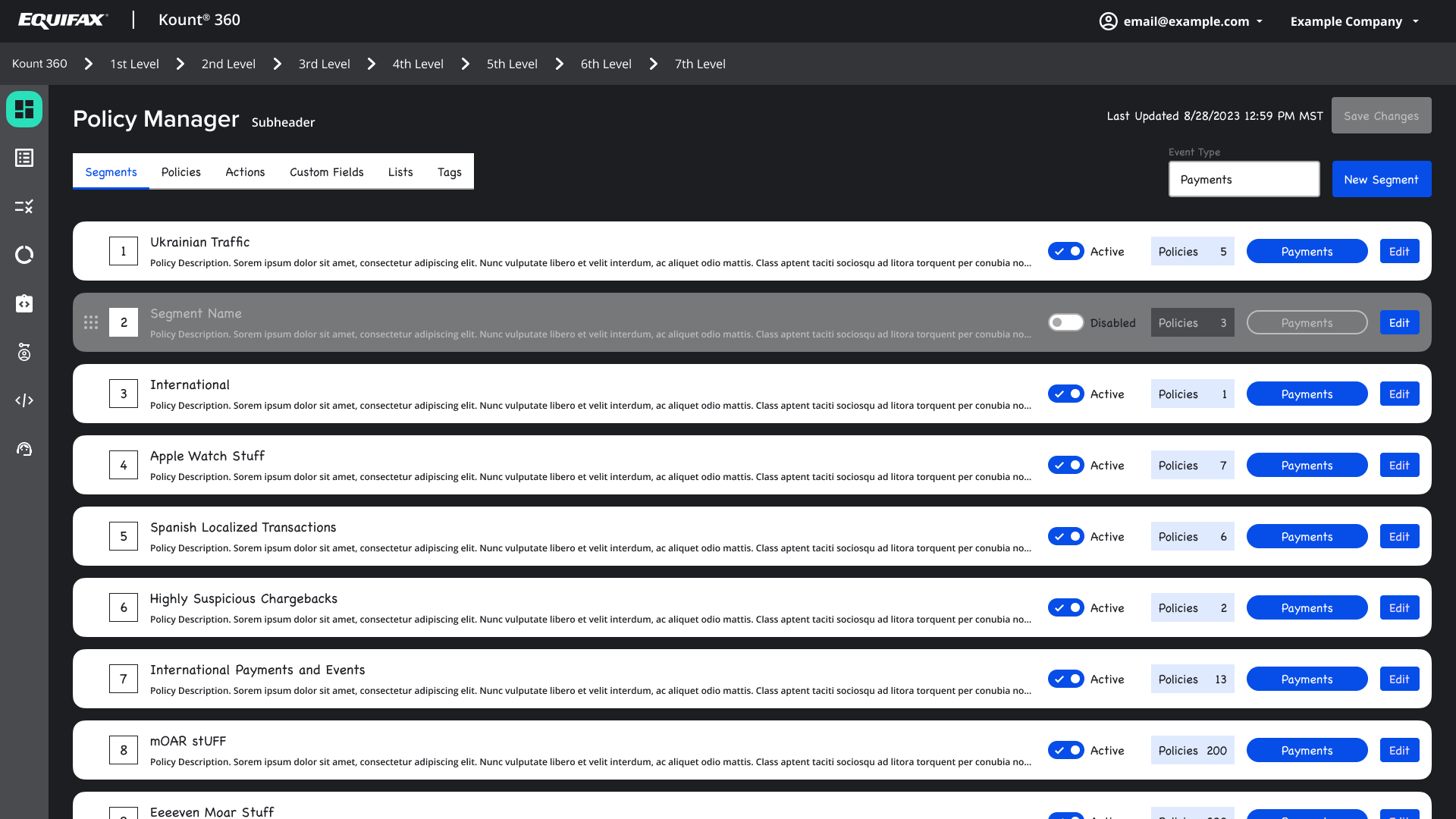
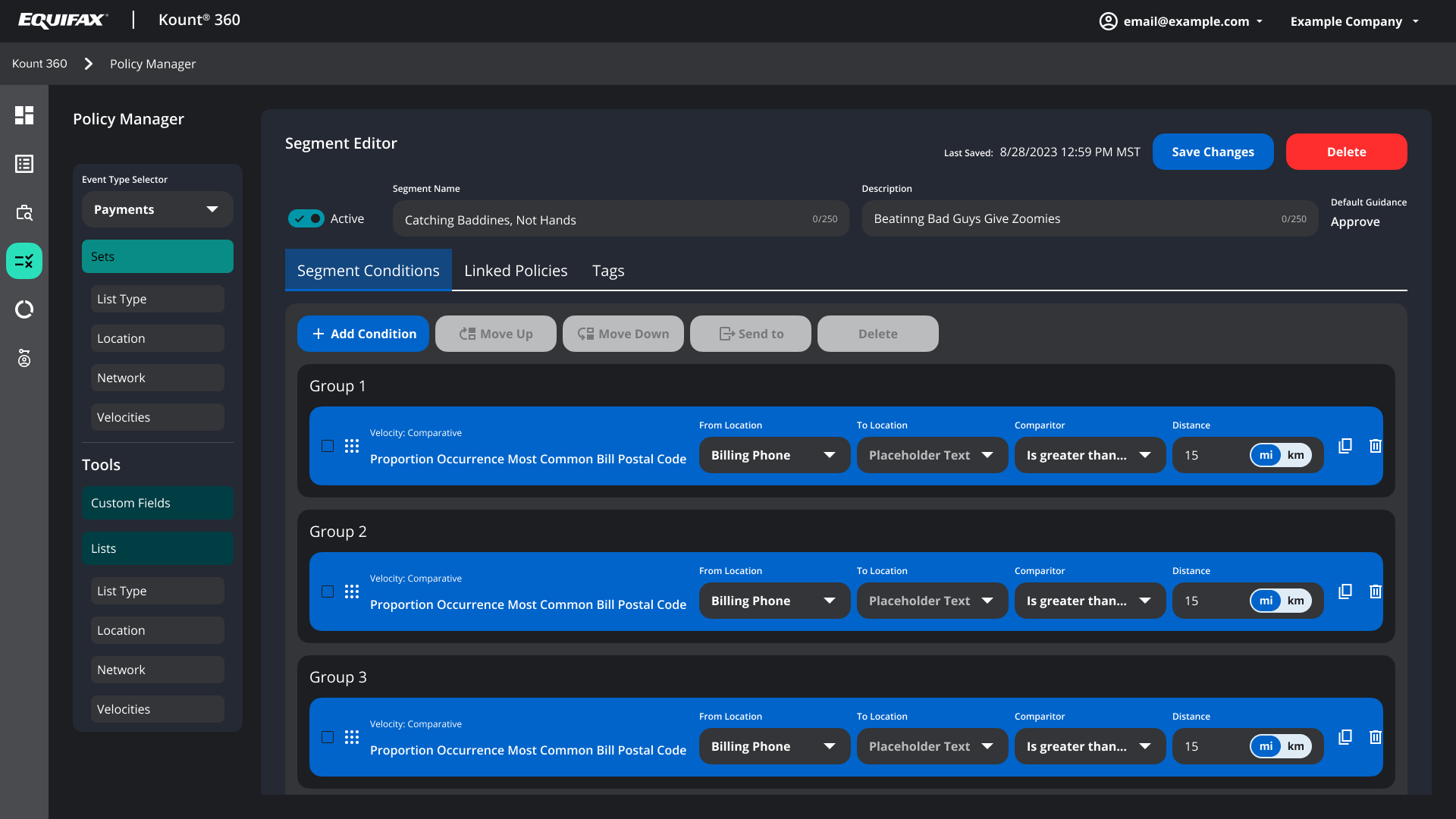
Added support for multiple event types and merged two legacy code bases by removing policy sets and renaming triggers to segments.
Version 3 (2024-2025)
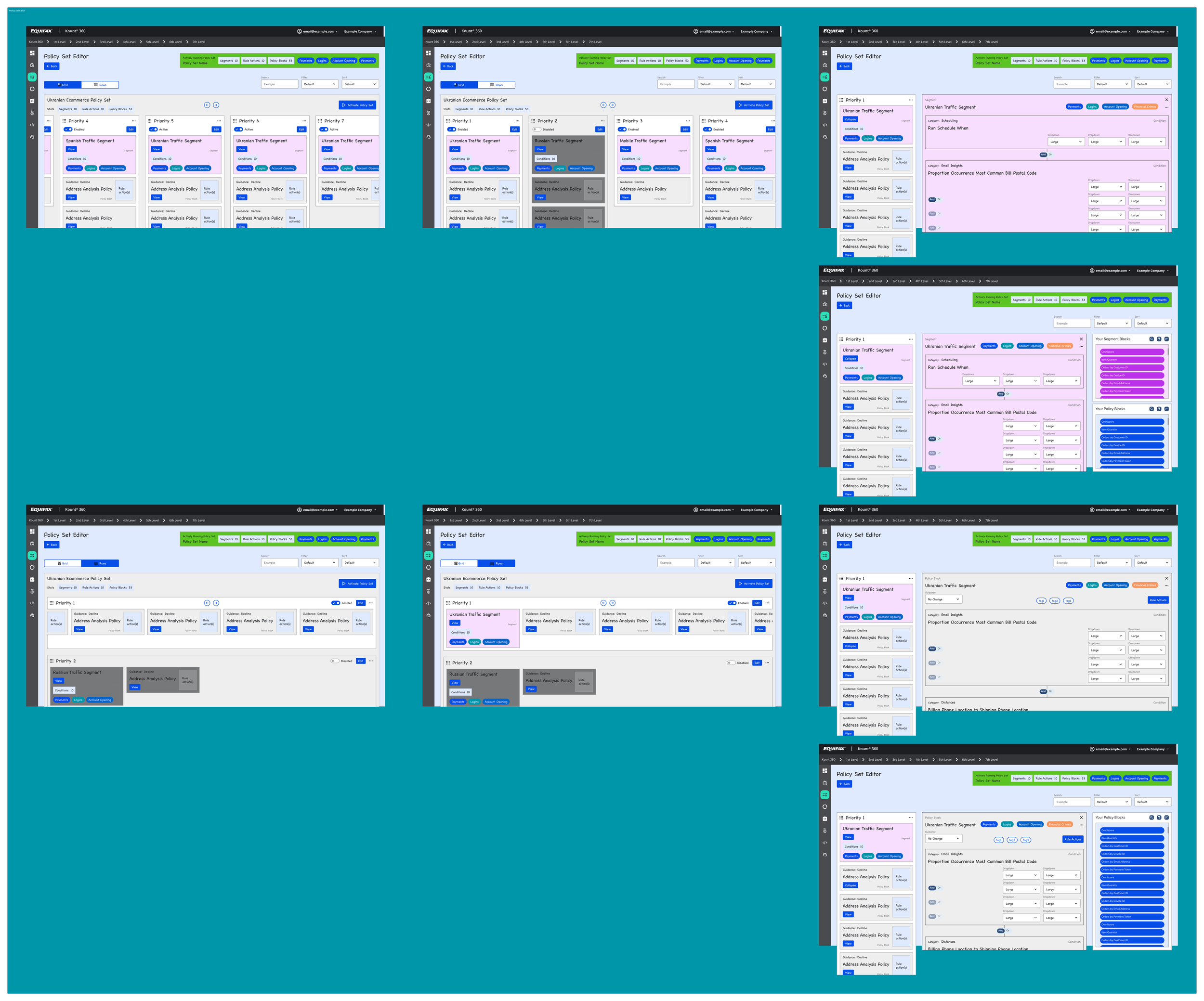
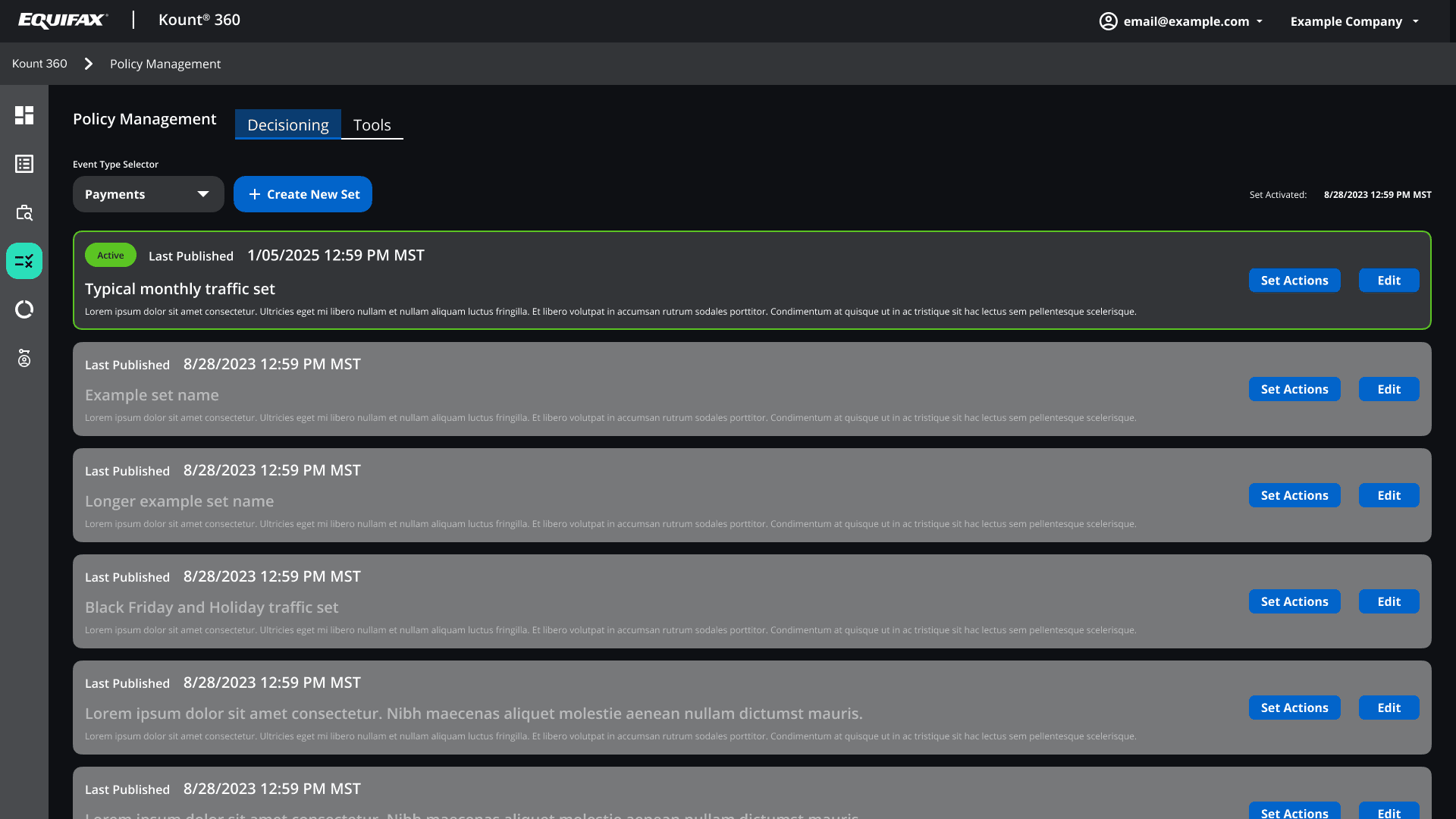
introduced versioning, reintroducing policy sets to support staging updates, enhanced fraud rule control, and groundwork for testing against different data sets.
This evolution addressed needs in sectors like e-commerce and fintech, where rapid policy adjustments are crucial to minimizing losses. The team faced shifts, including three changes in the lead product manager, which influenced collaboration dynamics.


Identifying the Issues
Challenges varied by version. In the first, development moved slowly, with some discrepancies in implementing the intended user experience. The second version involved early research and wireframing, but key discussions excluded design input for months, resulting in a minimum viable product that favored speed over refined usability. For the third, requirements came late, with initial timelines of just two weeks. Scope grew after collaboration, but priorities prevented full user validation. Later, higher-level feedback prompted a redesign, handled partly through team wireframes during an absence, limiting final input to high-fidelity refinements.
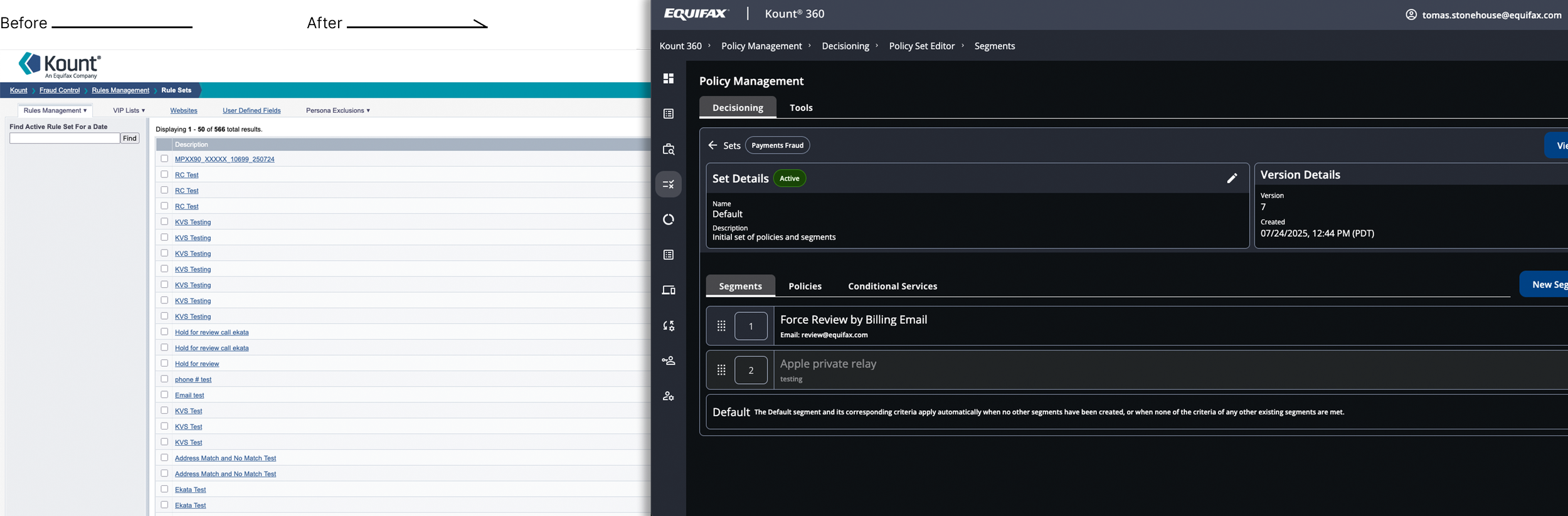
Feedback from the legacy platform highlighted several hurdles. Rule setups were often complex, leading to longer task times and lower completion rates. Users struggled with understanding fraud policies, and the absence of features like "OR" logic or versioning increased risks during updates. The aim was to streamline these processes, improve usability, and boost overall efficiency without sacrificing security.
Approach to Design
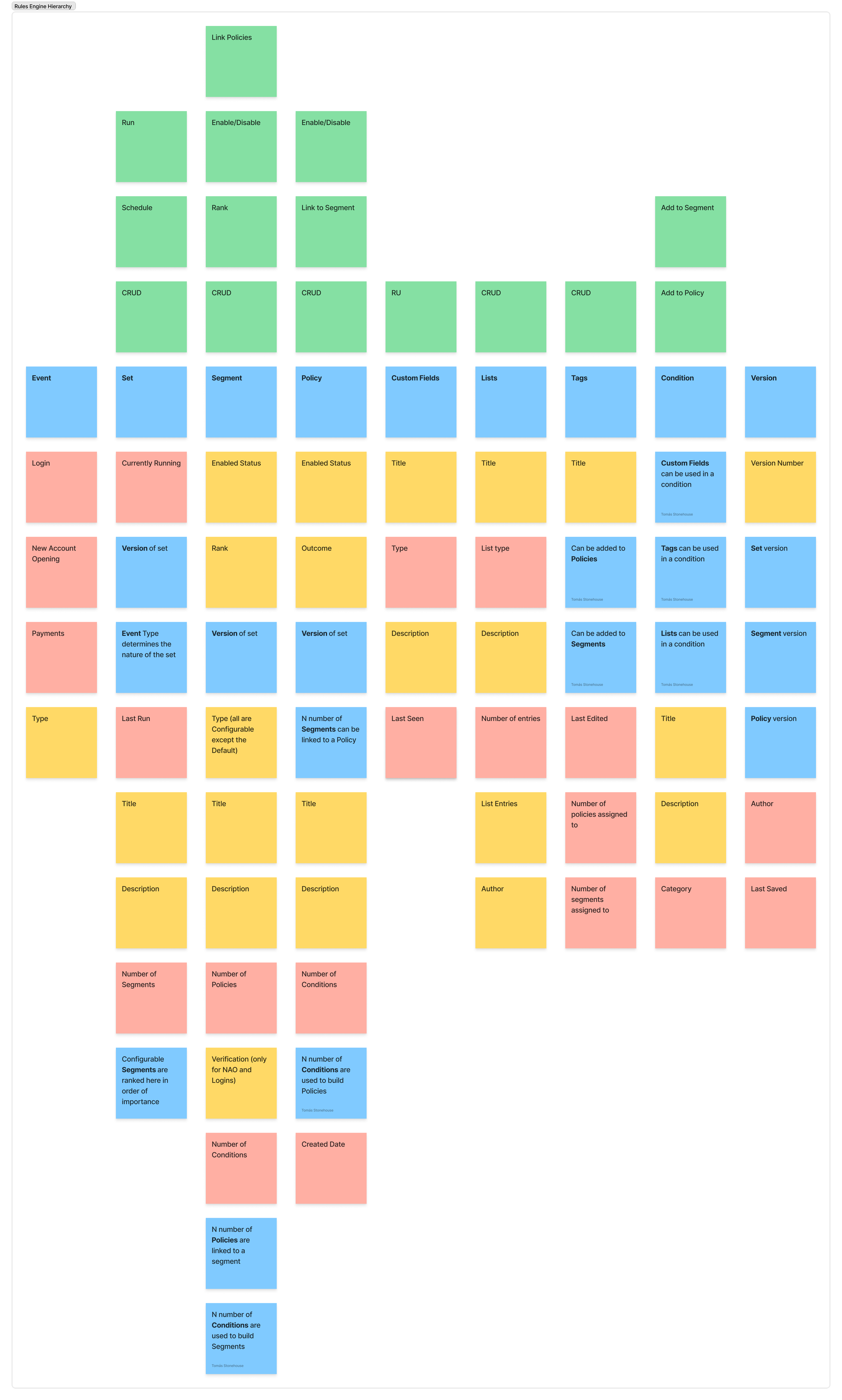
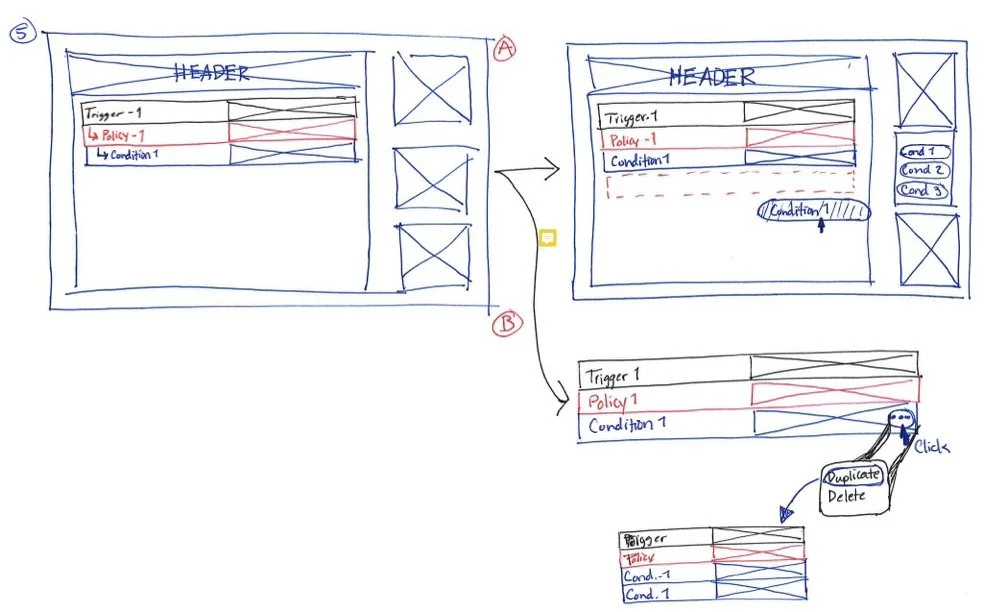
The process emphasized collaboration and iteration. Stonehouse worked with product managers and engineering architects to define problems using tools like Jira and Confluence. Research involved interviews with internal and external users, plus analytics from Heap and studies via Optimal Workshop.
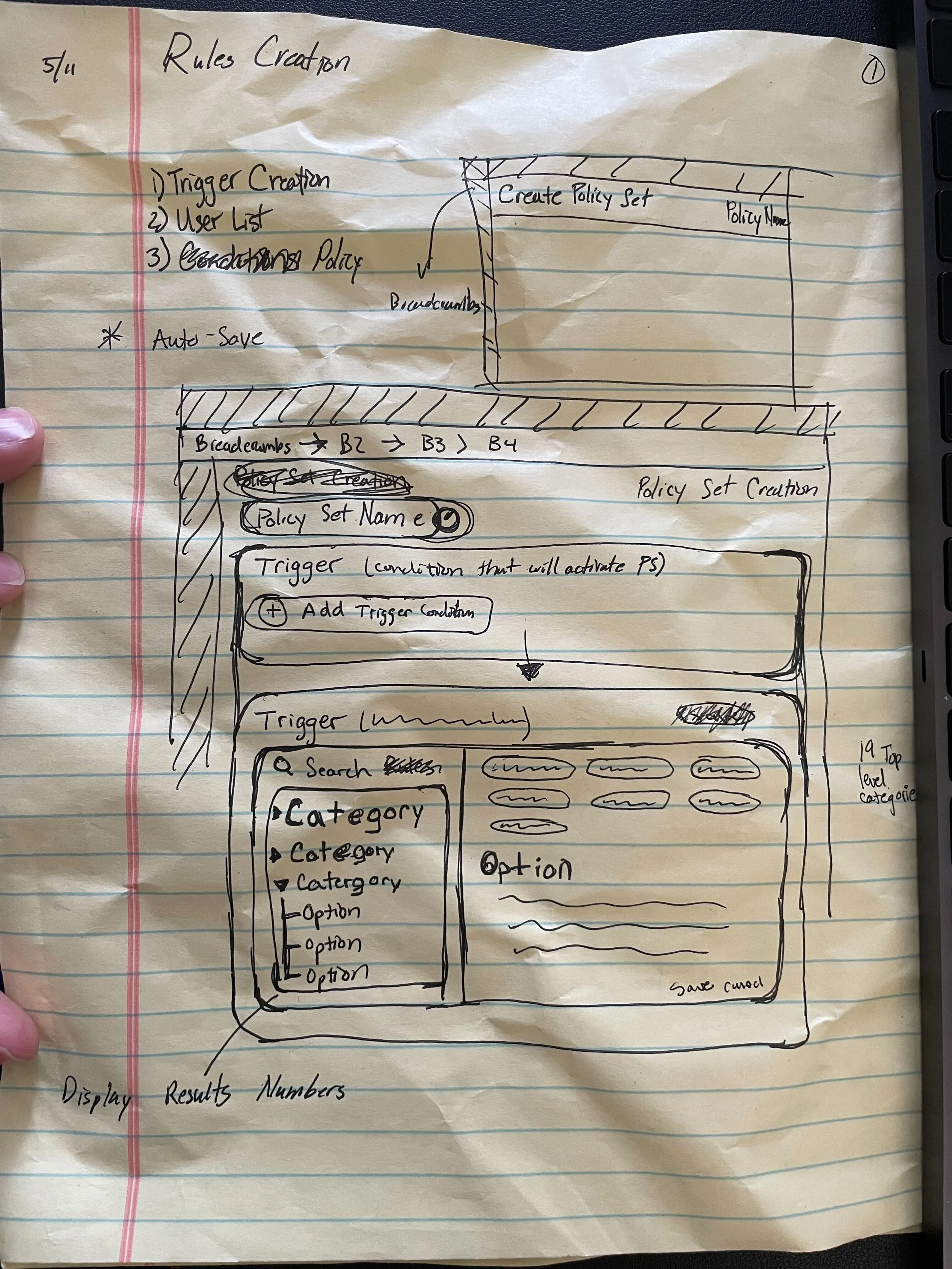
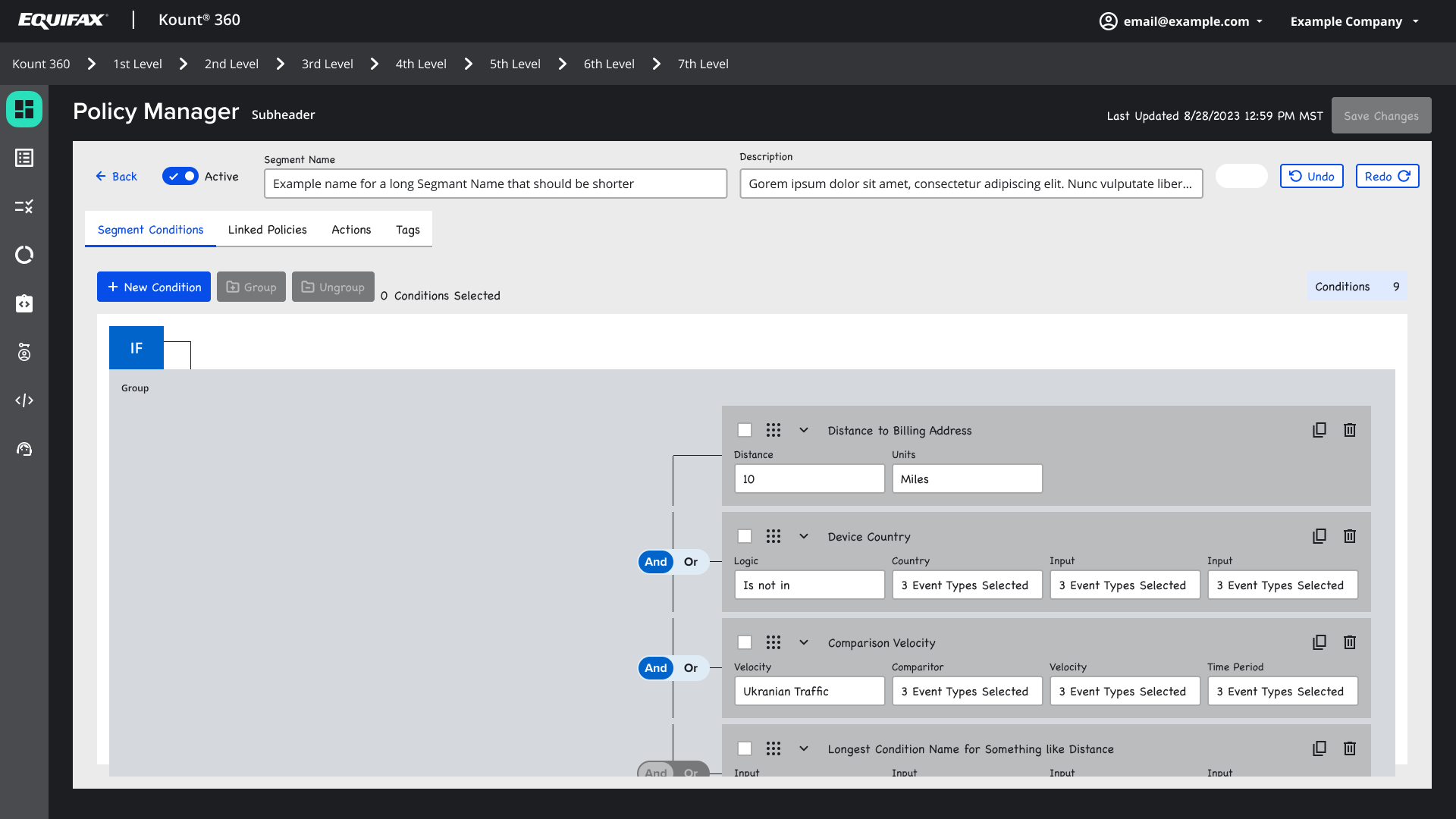
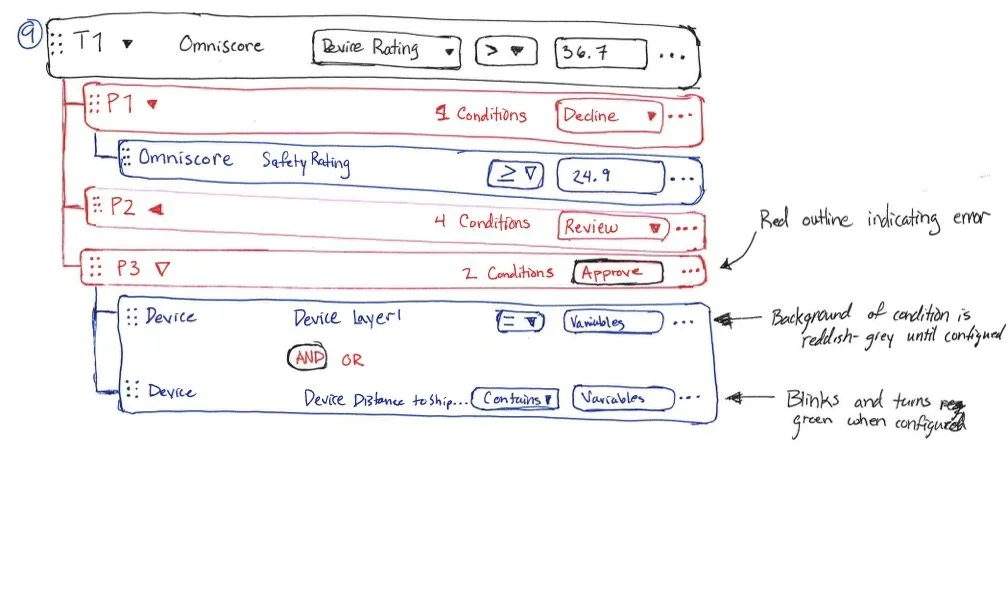
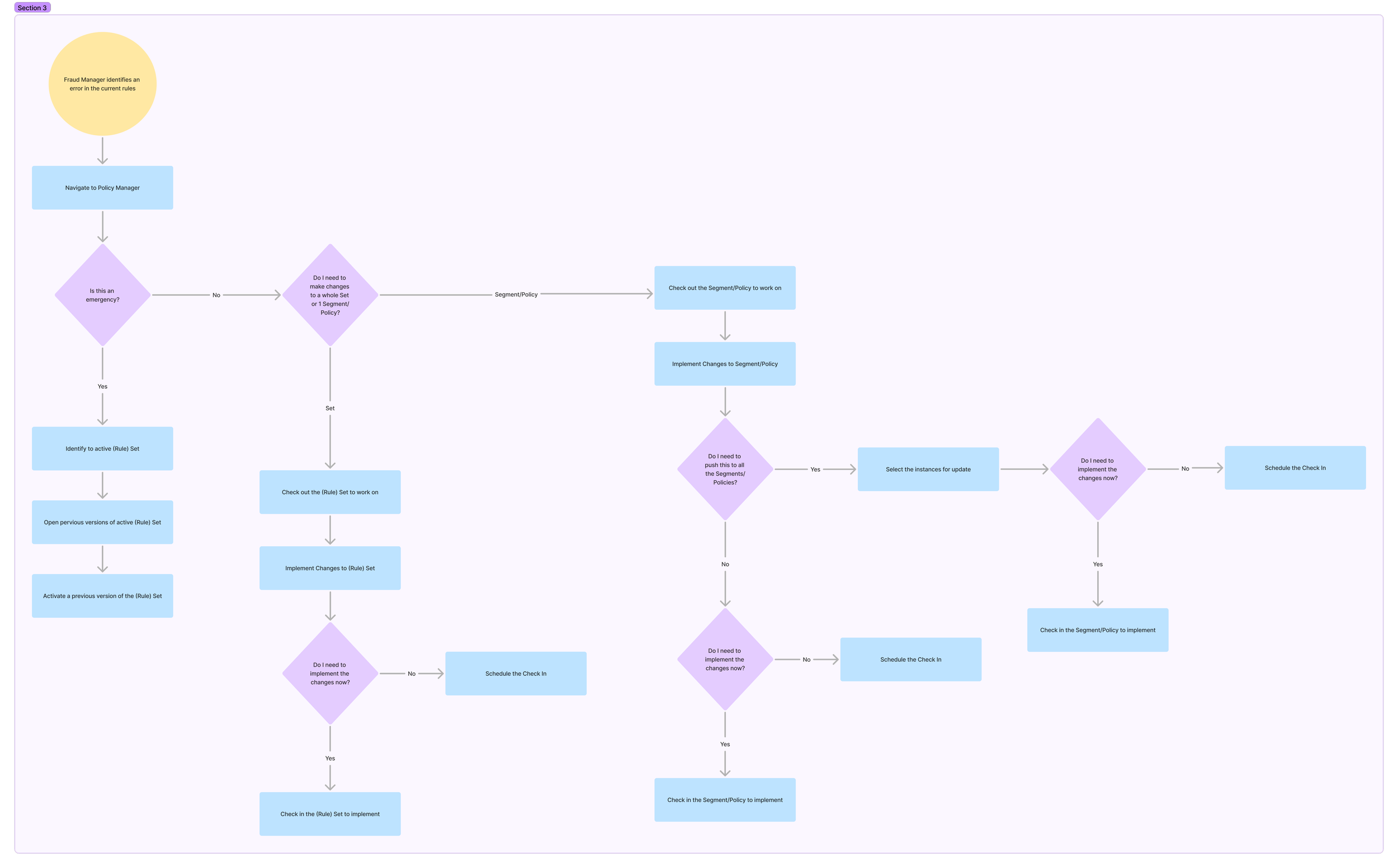
Steps included:
Outlining issues with product managers through documentation in Jira and Confluence, supplemented by Optimal Workshop.
Gathering insights from users and data via Heap and Optimal Workshop.
Aligning teams on direction in the product requirements document, resolving feasibility questions.
Developing wireframes in Figma.
Iterating with product and engineering to refine solutions.
Creating high-fidelity mockups and prototypes to illustrate functionality.
Validating designs with users through internal tests, external participants on Optimal Workshop, and Heap data where possible.
Adjusting based on feedback, though time constraints in later versions reduced validation opportunities.
This structured method ensured each version built on prior learnings, adapting to team changes and priorities.
Key Enhancements
Innovations targeted specific user needs:
Version 1 (2021 - 2023)
In Version 1, "OR" logic simplified rules, segmentation improved targeting, and scheduling allowed planned changes. These addressed complexity in the legacy system.
Version 2 (2023-2024)
Version 2 enabled multiple event types and code base reconciliation. Removing policy sets and using segments streamlined concepts, though it was a business choice that made scheduling more involved to achieve a quick release.
Version 3 (2024-2025)
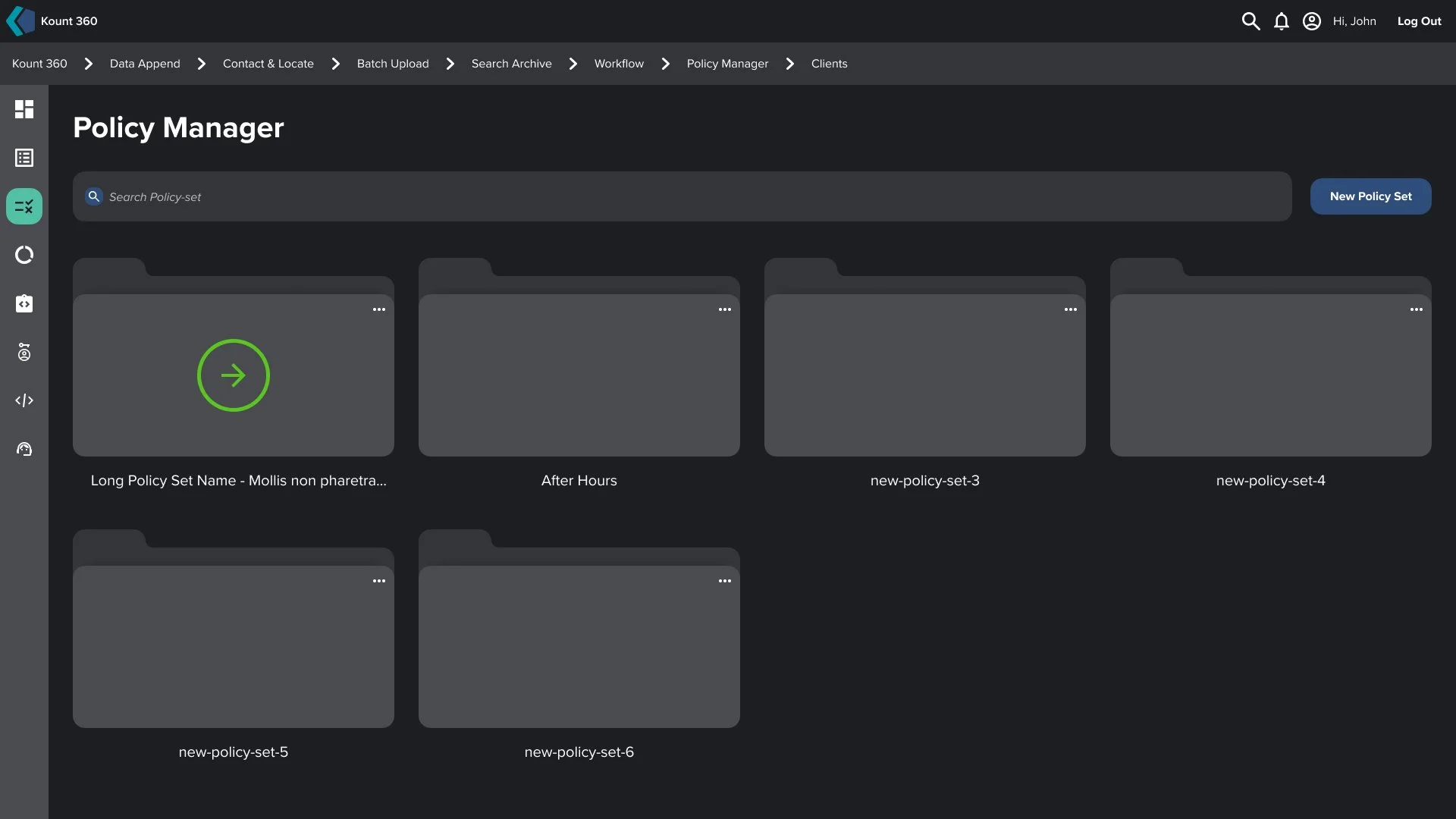
Version 3 added versioning with policy sets, facilitating staged updates and better control. It simplified scheduling as a byproduct and set up future testing capabilities, despite some de-optimization from scope cuts.
These updates made the feature more adaptable, helping teams respond faster to fraud patterns.
Results Achieved
Overall, the redesigns improved policy understanding, task speed, and completion rates, strengthening fraud prevention. Visuals such as paper wireframes, Figma designs, prototypes, and before-after comparisons are available by contacting me directly.
User responses and metrics showed progress:
For Version 1, feedback indicated triggers were confusing, but "OR" logic helped reduce rule complexity.
Version 2 received praise for segments clarifying triggers, though scheduling felt more complicated without policy sets.
In Version 3, adoption hit 41.5 percent, with a 64.5 percent completion rate for new policies. Users noted a clunky feel due to reduced scope.
May - 100k transactions per day
November - 1M transaction per day
This project demonstrates how iterative design can overcome obstacles to deliver practical improvements in high-stakes tools like Kount 360.