Northwestern MPD² · 2020
Autonome
Young cooks avoided handling raw meat because the process felt unsafe and non-intuitive. We turned ethnographic research into a single kitchen tool, a provisional patent, and a lean business case aimed at that gap.
Context
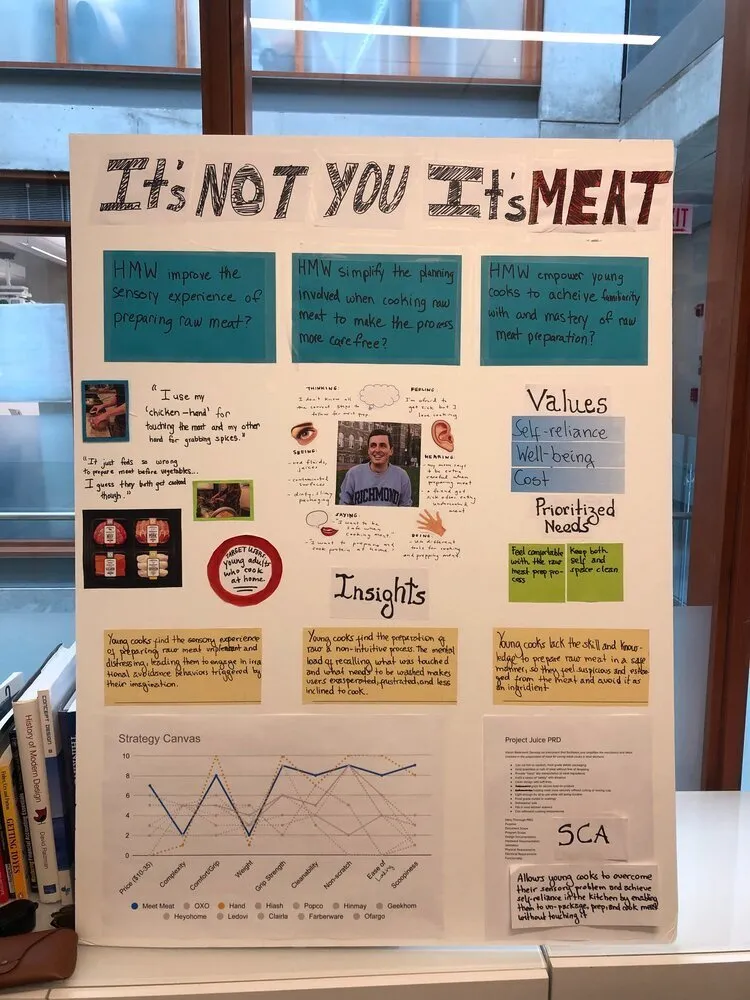
Young cooks, especially millennials living in small apartments, often avoided preparing raw meat at home. The process carried a high mental load: tracking what had been touched, when to wash, how to keep surfaces clean. The sensory experience was unpleasant. Avoidance was common even when people wanted to cook.
The year-long capstone in Northwestern’s MPD² program asked for end-to-end product work: research, concept, prototype, and a path to market. Autonome started as a kitchen independence brand. The problem space that held up under research was raw meat handling.
Research to insight
Ethnographic work in home kitchens, interviews across user groups, and structured analysis produced three insights that pointed at the same gap: safety, intuition, and sensory load during preparation. Other problem spaces were considered. Raw meat was the most productive.
Observation and self-documentation matters more here than survey averages. The frustration was specific: mess, noise, uncertainty about contamination, and a process that never became automatic.
Ideate and constrain
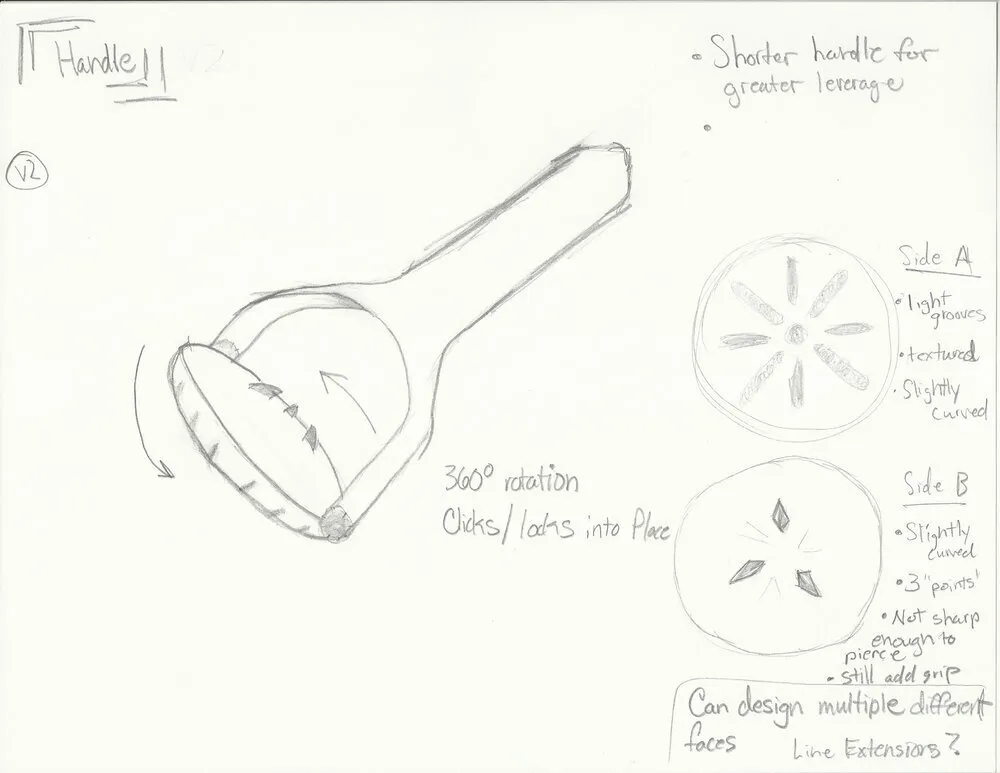
Ideation used a vector map and a deliberate bias toward risk (creativity plus risk equals results). Early concepts included a multi-tool kit. Prototyping under COVID constraints forced the team to work with what was available at home and to simplify hard.
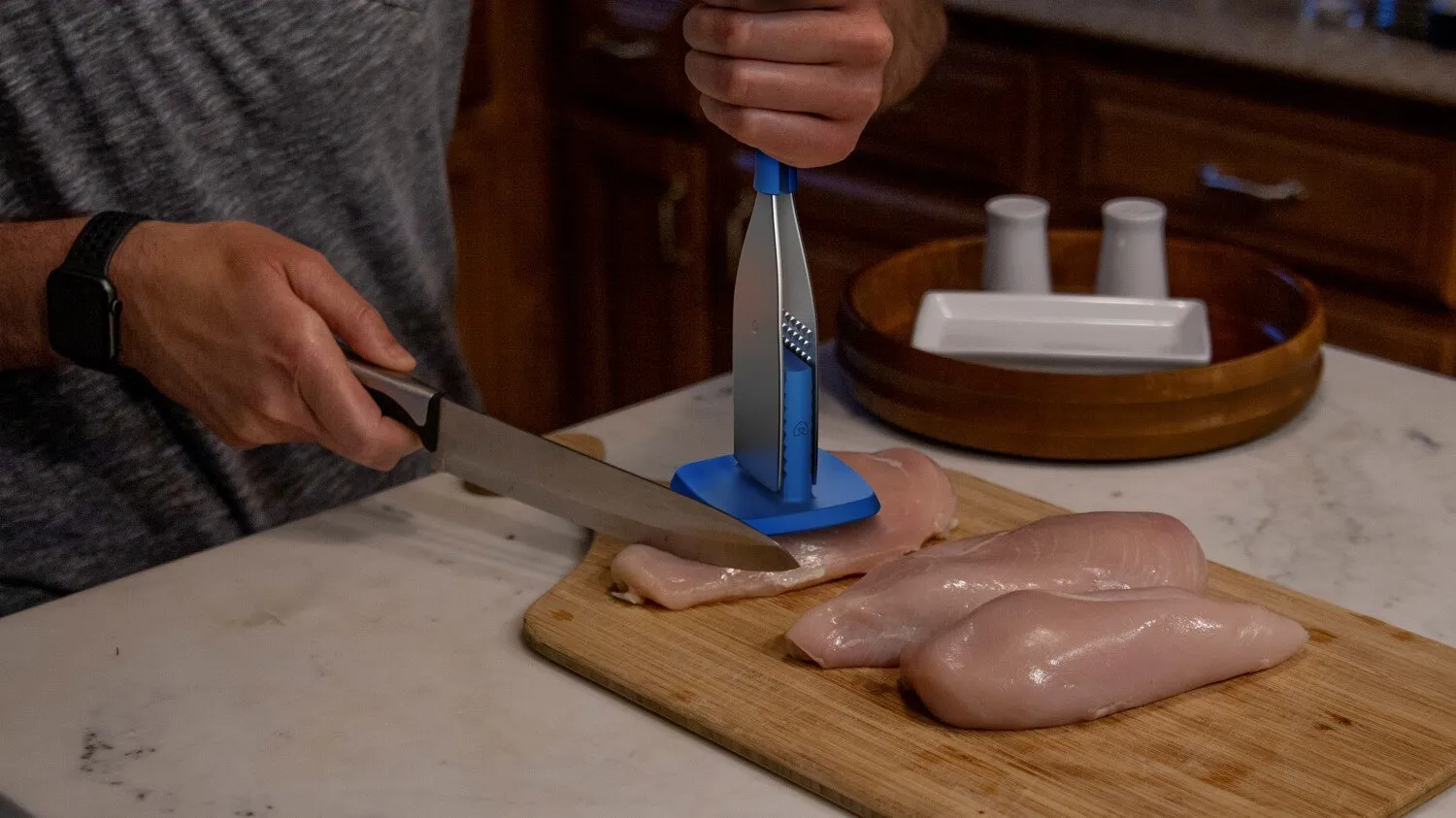
The decisive cut was from a three-tool kit to a single tool. Manufacturability and market fit both improved. The product became the Meat Handler with an Anchor attachment under the autonome brand, built around Grablock mating technology.
Path to market
A provisional patent was filed on Grablock. Retail target was set at $19.99 based on bill of materials and channel margins. The business plan was lean-startup shaped: millennials first, with room to expand age segments later. Competitive edge rested on IP and on solving a job other kitchen tools ignored.
The work was never only industrial design. It was research, product definition, and a business argument that could survive contact with cost and channel reality.
Close
Autonome is the graduate project that runs closest to how I work now: start with what people actually do, cut until the product is manufacturable, and only then argue the business case. The patent and the pricing model are artifacts of that discipline, not decorations on a concept board.
Evidence
Research through patent and business case for a manufacturable kitchen tool.
This was a year-long capstone in Northwestern's Master of Product Design and Development Management program. The evidence is the process and the artifacts: ethnography, iteration under COVID constraints, a simplified single-tool design, a provisional patent on Grablock, and a priced lean business plan. I am not claiming market outcomes I did not measure.